
Author: Acintia Wright, Sexual Health Advocate & Rapid stART Program Manager at The LGBTQ+ Center
I remember a time when I was sitting in the airport some years ago on my way to the USCHA in Florida. I asked myself if there would be an ADAP (AIDS Drug Assistance Program) for the younger generation that may become HIV infected.
I was with some fellow members of the US Positive Women’s Network (PWN), along with other women from WORLD (Women Organized to Respond to Life Threatening Diseases). In past meetings, we had a lot of discussions about the ADAP programs due to the crisis that we were facing at that time.
ADAP supports about 25% of the 1.2 million people living with HIV in the United States. ADAP should be automatically available here in the US for people living with HIV/AIDS regardless of income status, and it should be readily accessible to those in need. Without access to ADAP, HIV-positive individuals could progress to AIDS, and our rates of infection will continue to rise.
Our ADAP crisis had not reached the plateau like that of many states at that time. Today, I cannot say that, as we are in a crisis. Today many states have waiting lists. Many people have lost their ADAP due to income levels being too high. Lots of people are still very impacted by this crisis today.
We have read about Bridge Funding, which is ensuring that there is some medication coverage available until June 2026. But what happens after that?
ADAP continues to be a crucial safety net for low-income, uninsured, and underserved populations living with HIV (PLWH). Nearly 20 states have scaled back HIV medication programs. We know that this is a huge setback for the newly diagnosed, as funding continues to dwindle in many states.
When the medication is taken daily it suppresses the virus to an undetectable level, meaning it cannot be transmitted from one person to another. This is known as the U=U campaign: Undetectable = Untransmittable.
In the past, the income cap for some was 63,840; now it’s as low as 20,748 in many states. ADAP is still a safety net for many people.
We may soon be looking back, saying this is like the 80s, when many mothers passed away and left their children as orphans. Let’s continue to use our voices as a nation to keep ADAP programs alive and well, so that HIV rates in America do not mirror those in under-resourced regions around the world.
As a woman diagnosed 30+ years ago, if I did not have access to ADAP, it’s very possible that my name would be represented on the AIDS Quilt alongside so many others. Families would be left saying, “My mom died due to budget cuts for ADAP.”
As stated by Esteban Wood, Director of Advocacy and Legislative Affairs at the AIDS Healthcare Foundation (AHF), this is an economic disaster, a public health disaster, and a moral disaster.
About the Author
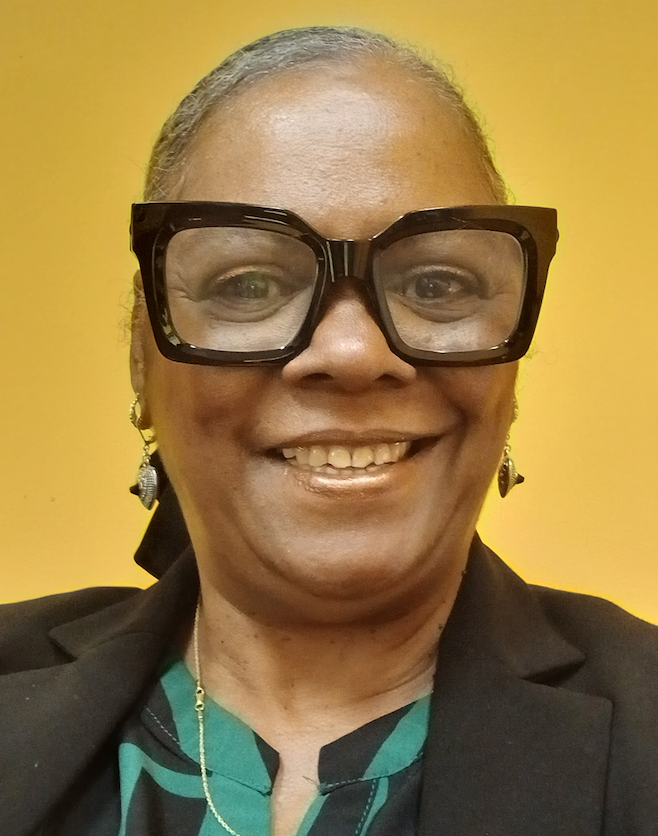
Acintia Wright has worked with The LGBTQ+ Center for 18 months as a Sexual Health Advocate, bringing a wealth of experience in the healthcare field. She has recently taken on the role of Rapid stART Program Manager.
Acintia has been an integral part of the Sexual Health Advocates team at the Arlene Cooper Community Health Center. She brings over 30 years of experience in HIV care, and enjoys assisting clients in understanding the importance of testing and remaining in care.
In her new role, she is excited to work more deeply within the community, supporting medical providers across the valley in building and maintaining relationships that help create stronger care pathways for people living with HIV and improve overall health outcomes.
Acintia is a member of the Sisters in Strength support group here at The Center for African American women, as well as part of the Outreach Team.
You can always hear her somewhere singing, dancing, or cooking. Her greatest passion is traveling to see her seven grandchildren whenever she can.